

Cold email still works for landing first clients, but only when it’s short, specific, and followed up. A study of 12 million outreach emails found that just 8.5% got a response, while a single follow-up boosted replies by 65.8% (Backlinko). So the difference between silence and a booked call is rarely a clever subject line. It’s relevance plus persistence. Below are seven cold email templates you can copy, the rules that make them work, and a simple follow-up rhythm that stays polite and legal.
Key Takeaways – Most cold emails get ignored. Only 8.5% of outreach emails receive a reply (Backlinko study of 12M emails). – Follow-up is where replies come from. One follow-up lifted replies by 65.8% in the same study. – Short beats clever. Keep cold email templates under about 125 words, with one problem and one small ask. – Personalize the first line. A specific observation shows you’re not blasting a list. – Stay legal. In the US, CAN-SPAM applies to business email too: honest subject lines, a real address, and an easy opt-out.
Does cold email still work for getting clients?
Yes, if you treat it like a conversation starter instead of a sales pitch. Cold email is one of the few channels where a complete beginner with zero followers can reach a decision-maker directly. It costs nothing but time, and a handful of good conversations is often all a new freelancer or consultant needs.
The math is humbling, though. At an 8.5% reply rate, 50 emails get you about four replies. Add one follow-up, and the Backlinko data suggests that number climbs to roughly seven (Backlinko). That’s why the cold email templates below come in a set: an opener, a follow-up, and a polite close.
Cold email templates also pair well with warmer channels. Nielsen’s research found that around 88% of people trust recommendations from people they know above other forms of promotion (Nielsen). So your first cold email templates should borrow trust wherever they can: a mutual contact, a shared industry, or a specific result you’ve already delivered.
What makes a cold email actually get a reply?
Five rules sit under every one of the cold email templates in this guide, and under any good cold email you’ll ever write. Break them, and even the best template sounds like spam.
- A real reason to write. Open with something specific: a job post they published, a broken form on their site, a talk they gave. “I came across your company” isn’t a reason.
- One problem, not five. Name the single outcome you can help with. More options mean more thinking, and thinking means “later.”
- Proof in one line. A result, a relevant client, or a short example. If you have none yet, offer a small free piece of work instead.
- A tiny ask. Ask for a reply or a 15-minute call, not a contract. Small asks get small yeses, and small yeses lead to bigger ones.
- Short and plain. Aim for under about 125 words, written like a note from a person. No images, no heavy design, no attachments on the first touch.

Before you send anything, be clear on what you’re offering and what it costs. If you haven’t packaged your skill yet, our guide to turning a skill into a sellable offer comes first. Cold email templates can’t fix a fuzzy offer.
7 cold email templates you can copy today
Swap the brackets for real details. These cold email templates are starting points, not scripts to blast. Every template works best when the first line could only have been written to that one person.
Template 1: The specific observation
The most reliable of all cold email templates. Best for: service providers who can spot a visible problem.
Subject: Quick idea for [company]’s [page/process]
Hi [Name],
I was on [company]’s [pricing page] and noticed [specific issue, e.g. the sign-up button doesn’t load on mobile]. That’s usually costing sign-ups quietly.
I help [type of business] fix exactly this kind of thing. For [similar client], a similar fix [result].
Want me to send over a two-minute video showing what I’d change? No charge.
[Your name]
Template 2: The free quick win
One of the few cold email templates that works with zero portfolio. Best for: brand-new freelancers with no portfolio yet.
Subject: Made something for [company]
Hi [Name],
I’m building my portfolio in [skill] and picked [company] because [genuine reason]. I put together [a rewritten product description / three ad headlines / a quick audit] for you. It’s yours to use, no strings.
[Link or 3-line preview]
If it’s useful, I’d love to do more like it. Either way, I hope it helps.
[Your name]
Template 3: The mutual connection
Best for: any time you share a contact, community, or former employer.
Subject: [Mutual contact] suggested I reach out
Hi [Name],
[Mutual contact] mentioned you’re [hiring for / struggling with / growing] [specific thing]. I help [type of business] with [outcome], most recently [short result].
Would a 15-minute call next week be useful? Happy to work around your schedule.
[Your name]
Template 4: The case study
Best for: when you have one real result to show.
Subject: How [similar company] [achieved result]
Hi [Name],
I recently helped [similar company] [specific result, with a number] in [timeframe]. Since [company] is [similar situation], I thought the approach might be relevant.
Here’s the one-page summary: [link]. Worth a quick chat to see if it would work for you?
[Your name]
Template 5: The industry insider
Best for: career-changers pitching into the industry they just left.
Subject: From one [industry] person to another
Hi [Name],
I spent [X years] in [industry] at [company or role], so I know how much time [specific painful task] eats up. I now help [type of business] [outcome] so their team can focus on [what matters].
Open to a 15-minute call to see if it fits?
[Your name]
Template 6: The follow-up
Most cold email templates stop at the first message, which is where most replies are lost. Send three to four business days after your first email, as a reply in the same thread.
Hi [Name], just floating this back to the top of your inbox. Happy to send the if it’s useful. If the timing’s wrong, no worries at all.
[Your name]
Template 7: The polite close
Send about a week after the follow-up. It often gets the most replies of the whole sequence, because it’s easy to answer.
Hi [Name], I haven’t heard back, so I’ll assume [problem] isn’t a priority right now. I won’t keep filling your inbox. If it becomes one, I’m a reply away. Wishing you a great quarter.
[Your name]
Which of these cold email templates should you use?
Pick cold email templates by what you have, not by what sounds clever. Each of these cold email templates is built for a different starting point, so the right one depends on your proof, your connections, and your prospect.
| Your situation | Best cold email templates | Why it works |
|---|---|---|
| No clients or portfolio yet | Template 2 (free quick win) | Proof you create on the spot |
| You spotted a clear problem | Template 1 (specific observation) | Relevance in the first line |
| You share a contact or community | Template 3 (mutual connection) | Borrowed trust |
| You have one strong result | Template 4 (case study) | Evidence beats claims |
| You’re changing careers | Template 5 (industry insider) | Your past job is your credibility |
Most beginners should start with Templates 1 and 2. They don’t require a portfolio, and they give the reader something useful before you ask for anything.
How should you adapt cold email templates for different clients?
The same structure works everywhere, but the details change with the audience:
- Local businesses (clinics, gyms, restaurants): lead with something you can see, like a slow website, missing reviews, or an outdated menu. Owners read their own email, so keep cold email templates warm and plain.
- B2B and software companies: reference a hiring post, a recent launch, or a funding announcement. These buyers get many pitches, so the first line has to prove real research.
- Creators and small agencies: point to a specific piece of their work you liked, then offer help with the part they’re clearly short on, such as editing, design, or admin.
Whichever group you target, keep a simple tracking sheet: who you emailed, which of the cold email templates you used, the date, and whether they replied. After 30 to 50 sends, you’ll see which opener works for your offer. Double down on that one and retire the rest. That habit of testing, rather than guessing, is what turns cold email templates into a reliable client pipeline.
How do you personalize cold email templates in five minutes?
Personalization doesn’t mean a paragraph about their dog. It means one sentence that proves you looked. Here’s a five-minute routine before you send any of these cold email templates:
- Scan their website for a recent launch, a hiring page, or an obvious problem.
- Check their LinkedIn or blog for a recent post, talk, or company news.
- Write one specific first line based on what you found.
- Match the proof to their world. Use your most similar result or client.
- Pick the smallest useful ask. A reply, a video, or a 15-minute call.
Five minutes per email feels slow, especially when cold email templates promise speed. But ten thoughtful emails beat a hundred generic ones, and they don’t burn your reputation. If you want a target list to start from, the first 10 paying customers playbook shows how to find and prioritize the right people.
How often should you follow up on a cold email?
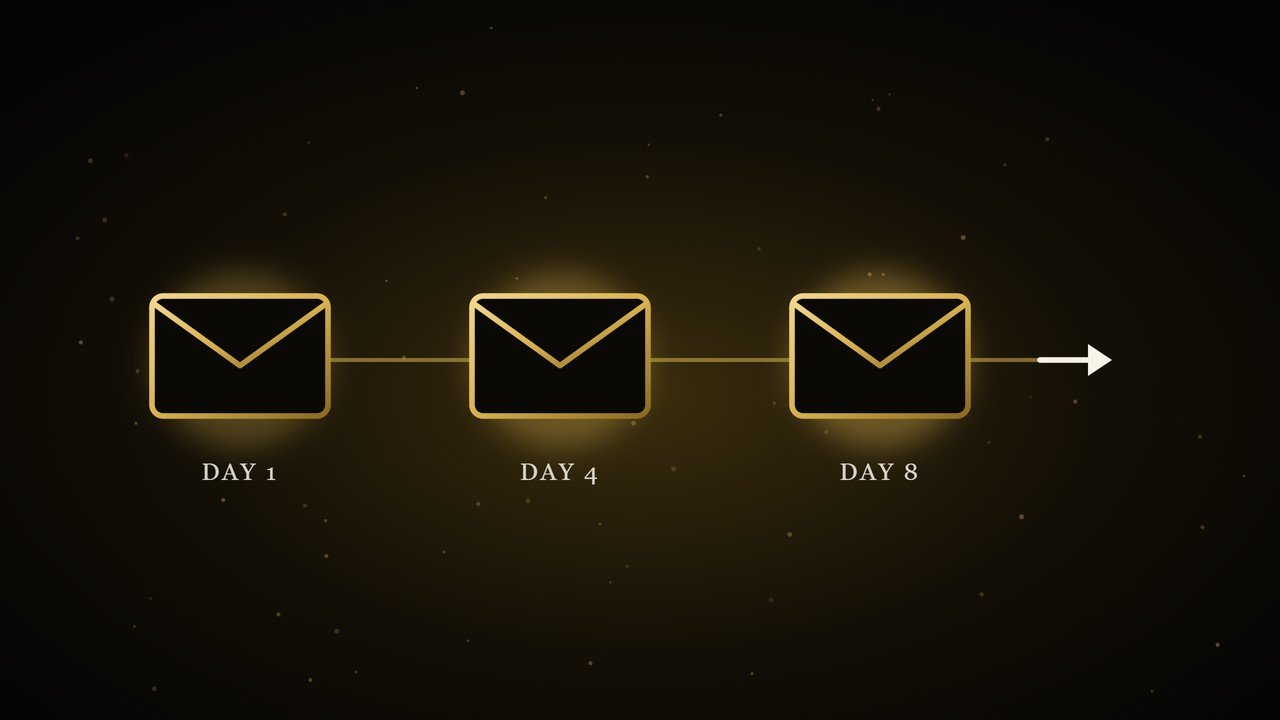
Two to three times, spaced out, then stop. A simple rhythm that respects people’s inboxes:
| Touch | When | Template |
|---|---|---|
| First email | Day 1 | Templates 1–5 |
| Follow-up | Day 4 | Template 6 |
| Value follow-up | Day 8 | Share a tip, example, or result |
| Polite close | Day 15 | Template 7 |
Whichever cold email templates you choose, send on weekdays; the Backlinko study found weekday outreach earned more replies than weekend sends (Backlinko). Reply in the same thread so the context stays attached, and stop the moment anyone asks you to.
Is cold email legal?
In the US, generally yes, as long as you follow the CAN-SPAM Act, and the FTC is clear that the law “makes no exception for business-to-business email” (Federal Trade Commission). The core rules:
- Honest headers and subject lines. Your “From” name must be you, and the subject must match the message.
- A valid postal address in the email (a P.O. box or registered private mailbox works).
- A clear way to opt out, such as “Reply ‘no thanks’ and I won’t email again.”
- Honor opt-outs within 10 business days, and don’t email that person again.
Penalties can reach $53,088 per violating email (Federal Trade Commission). Every one of the cold email templates above is easy to keep compliant: add your address to your signature and one opt-out line. Other countries can be stricter, especially in the EU, the UK, and Canada, so check the rules where your recipients live. When in doubt, keep volumes small, messages personal, and opt-outs instant. That’s good manners and good compliance.
What mistakes ruin good cold email templates?
- Talking about yourself first. Your first line should be about them.
- Asking for too much. “Can we hop on an hour-long call?” is a big ask from a stranger.
- Sending the same message to everyone. People can smell a mail merge. Personalize the first line every time.
- Attaching files or heavy images. They trigger spam filters and feel like work.
- Following up forever. Two or three touches is persistent. Seven is pestering.
- Pricing on the fly. Know your number before the call. Our guide to pricing your first offer helps you set it with confidence.
Most of all, don’t let cold email templates be your only channel. It works best alongside referrals, communities, and content. Our guide to getting your first customer shows how to combine them.
Citation capsule: In a Backlinko analysis of 12 million outreach emails, only 8.5% received a response, but a single follow-up message increased replies by 65.8%. Effective cold email templates for first clients are short (under about 125 words), open with a specific observation, offer one line of proof, and make a small ask, followed by two or three spaced follow-ups. In the US, CAN-SPAM applies to business-to-business email and requires an honest subject line, a postal address, and a working opt-out.
Want someone to review your first cold email? Join the free Ideas Into Income community, post your draft, and get feedback before you hit send.
Frequently Asked Questions
What is a good cold email template for getting clients?
A good one opens with a specific observation about the recipient, names one problem you can solve, adds a single line of proof, and ends with a small ask such as a 15-minute call. Keep it under about 125 words, plain text, with no attachments. Always follow up at least once.
How long should a cold email be?
Short: roughly 50 to 125 words. The recipient should understand who you are, why you’re writing, and what you’re asking for in under 30 seconds. Save detail for the reply or the call. Long emails from strangers tend to get skipped.
How many times should you follow up on a cold email?
Two to three times over about two weeks. A good rhythm is a first email on day 1, a short bump on day 4, a value follow-up on day 8, and a polite close on day 15. In Backlinko’s study, one follow-up alone boosted replies by 65.8%. Stop immediately if someone asks.
Is cold emailing legal?
In the US, it’s generally legal if you follow the CAN-SPAM Act, which covers business-to-business email: accurate headers, an honest subject line, a valid postal address, and an opt-out you honor within 10 business days. Rules are stricter in some countries, including the EU, UK, and Canada, so check where recipients live.
What is a good reply rate for cold email?
A study of 12 million outreach emails found an average reply rate of 8.5%. Personalized, well-targeted emails with follow-ups can do noticeably better. If you’re far below that, tighten your targeting and first line before sending more volume.
The bottom line
Cold email isn’t about volume. It’s about sending a small number of relevant, respectful notes and following up like a professional. Use these cold email templates as a starting point, not a script to blast:
- Open with a specific observation about them.
- Offer one outcome, one line of proof, and one small ask.
- Follow up two or three times, then stop.
- Follow CAN-SPAM: honest subject, real address, easy opt-out.
If you’d rather start with a warmer path, freelancing first shows how to turn existing contacts into your first paid work.
Ready to send your first ten? Join the free Ideas Into Income community and share which template you’re using.
Disclaimer: this article shares general business guidance, not legal advice, and it makes no promises about results or income. Email marketing laws vary by country; check the rules that apply to you and your recipients.
Sources
- Backlinko, “We Analyzed 12 Million Outreach Emails. Here’s What We Learned” — retrieved 2026-09-29
- Federal Trade Commission, “CAN-SPAM Act: A Compliance Guide for Business” — retrieved 2026-09-29
- Nielsen, “Trust in Advertising” (trust in people vs brands) — retrieved 2026-09-29